

Thames Water has launched a public consultation on its draft water resources management plan, asking for customers’ views on how the company plans to provide a secure and sustainable supply of water over the next 80 years.
Publication of the draft plan follows extensive and detailed modelling of more than 200 options by the UK’s largest water provider, accounting for significant population growth in London and the Thames Valley and a changing climate.
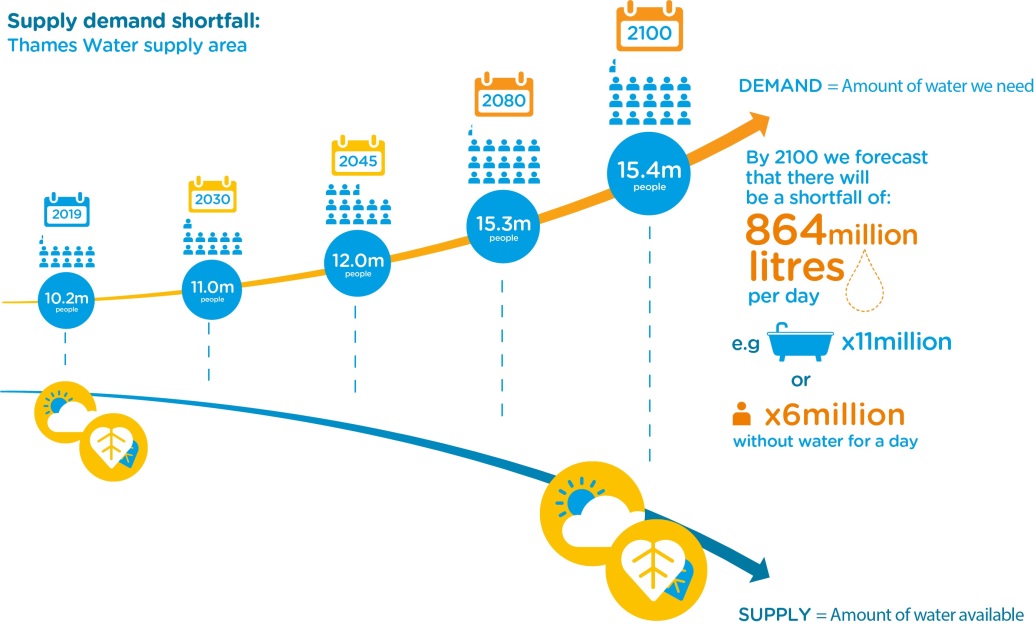 A key theme throughout the plan is making the most efficient use of all current available water resources, including setting an ambitious leakage target. The company is seeking to achieve a 15 per cent reduction in water escaping from its 20,000-mile network of pipes by 2025, 10 years earlier than originally planned.
The business is also set to install a further one million smart meters in homes by 2035, which put customers in control of their water use. To date, Thames Water has installed over 230,000 smart meters across the capital, with households reducing water use by an average of around 16 per cent.
Thames Water’s chief executive, Steve Robertson, said:
“By 2045, our region is expected to be home to two million more people. In contrast to the increasing demand, we expect to see a declining supply of water as climate change increases the likelihood and severity of droughts.
“Our plan aims to meet the growing needs of the wider south east, and we’ve been working with fellow water companies in England and Wales to take a co-ordinated approach to ensure we offer our customers the best possible value solution. We now want to hear what our customers and stakeholders think.”
New reservoir planned in Oxfordshire in 2040s
The water company said demand management proposals alone would not be enough to meet the increasing demand, so new sources of water are also proposed. These include a new scheme to take more water from the River Thames above Teddington Weir in west London from 2030, and constructing a new reservoir in Oxfordshire in the 2040s.
John Dickie, director of strategy and policy at business group London First, said:
“London businesses rely on clean and constant water supplies, from turning on the tap in offices, hotels and restaurants to cooling data centres. To keep the water flowing we need to reduce wasteful leaks and disruptive burst pipes, and put in place a long term plan to meet rising demand from our growing population.
“By doing more to manage demand, and developing significant new water sources, London will build essential resilience to future droughts.”
The water company said all responses would be carefully considered. A report will be produced in August, setting out the comments received and explaining how Thames Water has taken the into account in revising the plan.
Paul Britton, Thames Valley Chamber of Commerce chief executive, added:
“Population growth across the Thames Valley, and the impacts of climate change, are increasing the risk drought poses to the region through water use restrictions. This may limit the availability of water to certain sectors or, in extreme cases, to all businesses. The economic costs of such restrictions range from £600m to £2.1bn in an extreme drought. We therefore need to consider a step change in the level of water supply resilience in our region.”
Nicci Russell, Managing Director of independent water efficiency experts Waterwise welcomed the ambition set out in the plan, commenting:
“We only have to look at Cape Town to see the social, environmental and economic impacts in a global city of taking too little action, too late.”
Click here to access the technical summary of the plan
Click here to access a short overview of the plan
 Albion Water, the first NAV (New Appointment & Variation) to have been established in1999 and now under the ownership of SDS Water Group, has appointed Andy Holland as its new Director of Business Development.
 UK water companies are invited to join an upcoming webinar which will explore how the sector can take indirect potable reuse (IPR) from concept to full-scale operational reality.
 James Sumsion, CEO of predictive water intelligence specialists Kohtari, says the water sector needs to take a giant leap forward, so that it can anticipate and act upon water quality issues - rather than merely react.
 Ray Moulds, Sales Director at Flood Control International, takes a look at how automated sliding floodgates are supporting secondary containment at water and sewerage company sites.

 Hear how Scottish Water has completed its £235 million Ayrshire Glasgow Resilience Project - customers across Greater Glasgow, Ayrshire and East Renfrewshire will now benefit from a more secure and resilient water supply.
 Hear how United Utilities is accelerating its investment to reduce spills from storm overflows across the Northwest.
 Find out more about the remarkable career opportunities on offer at WSP - scroll down to watch the inspirational video.