
The Environment Agency, Yorkshire Water and a range of partner organisations have launched a major 'source to sea' natural flood management drive.
A wide-reaching 'source to sea' natural flood risk management and habitat creation scheme for the River Don was launched yesterday with a day of tree planting.
The collective ambition of multiple organisations across South Yorkshire to respond to the climate and nature emergency was marked with the first batch of planting of what will be 38,000 trees to better protect homes and businesses across the region from flooding.
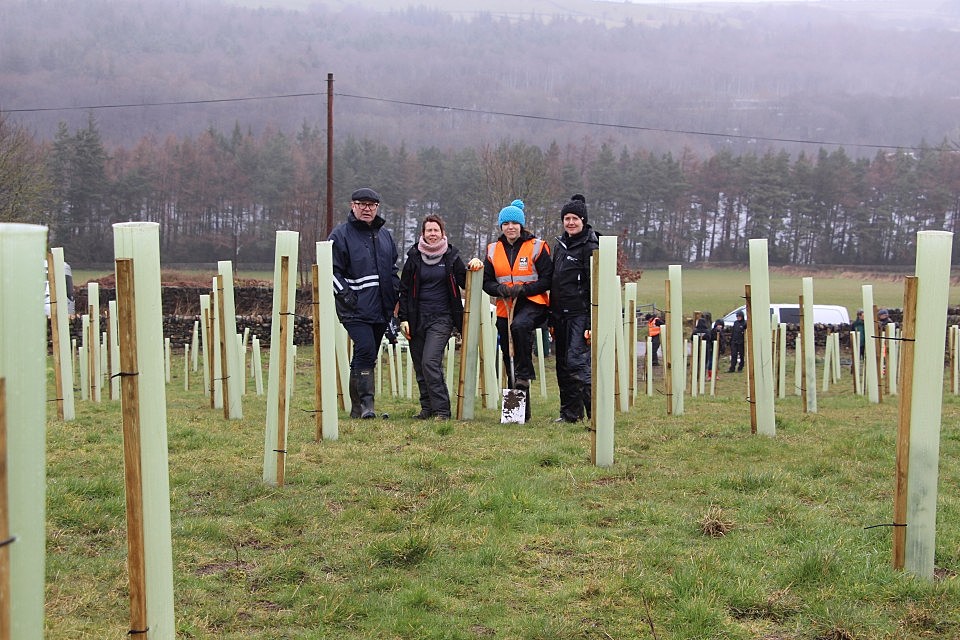
Photo: Richard Emmmott of Yorkshire Water, Liz Ballard of Sheffield & Rotherham Wildlife Trust, a ranger from trust, and Helen Batt of the Environment Agency
The November 2019 floods generated huge support to further develop a catchment-based approach to managing the risk of flooding at a landscape scale along the River Don.
Councillors and senior staff from organisations across the region including Environment Agency, Sheffield, Doncaster, Barnsley and Rotherham Councils, Sheffield and Rotherham Wildlife Trust, Don Catchment Rivers Trust, Sheffield City Region, the Woodland Trust, Forestry Commission and Moors for the Future were in attendance for the event at Brooks Bank Farm, near Underbank Reservoir, Stocksbridge.
The farm is a 45 acre Yorkshire Water holding at the headwaters of the River Don. The land is coming out of agricultural tenancy and being managed by Yorkshire Water, supported by Sheffield and Rotherham Wildlife Trust and the Woodland Trust, to deliver wider environmental outcomes to complement and support their one million trees planted target as part of the Northern Forest initiative.
The work supports the wider River Don catchment natural flood management programme which is in its early stages being led in partnership by the Environment Agency and Sheffield City Council to slow and store flood waters using nature-based solutions like tree planting and peat restoration to better protect homes and businesses.
Helen Batt, Environment and Business Manager at the Environment Agency said:
“The commitment of multiple agencies to work together to reduce and mitigate flood risk, is a powerful component of South Yorkshire’s response to the Climate Emergency. No one organisation can do it alone and a collaborative, partnership approach is essential in restoring nature at scale, reducing emissions and responding to the climate emergency.”
The collective ambition is to plant millions of trees, and create or restore hundreds of hectares of wetland and peatland habitat across the Don Catchment to help deliver a region resilient to climate change.
Mayor of the Sheffield City Region, Dan Jarvis, said:
“Last year I harnessed the support of 120 cross-party MPs to grow the Northern Forest. By planting 50 million trees, the Forest will help habitats thrive, a woodland culture to flourish, contribute to tackling climate change and reduce the risk of flooding.”
It’s great to see these new trees being planted as part of the Northern Forest, improving the environment for wildlife and helping to protect communities from further flooding.
Richard Emmott, Head of Corporate Affairs at Yorkshire Water said the tree-planting project has taken place on Yorkshire Water land and was an excellent example of partnership working which is happening all over Yorkshire, commenting:
“As the second biggest landowner in Yorkshire, we are working with other landowners, local authorities and third sector organisations to coordinate our approach to the problems that effective land management can help tackle – such as flooding and the climate emergency. We are keen to be ambitious with these partnerships.”
As well as planting one million trees by 2030, the water company is also involved in peat restoration schemes across its uplands – the utility is looking at innovative ways that natural flood management schemes in catchment areas can help reduce flooding issues.
Richard O’Callaghan, Regional External Affairs Officer at the Woodland Trust commented:
“The work that is going on here in the River Don catchment is an excellent example of partnership working to achieve landscape-scale environmental improvements for nature and people alike. This is what the Northern Forest is all about – we know that the right trees in the right place can provide multiple benefits and yet the North of England has tree cover well below the national average. By working together with landowners, public bodies and organisations who share our vision, we can ensure that trees play their full role in combating the crises in climate and biodiversity.”