
Scottish Water is helping biodiversity bloom alongside renewable energy generation at Scotland’s largest wastewater pumping station, with a new approach to weaving ecological improvements into suitable projects from the outset.
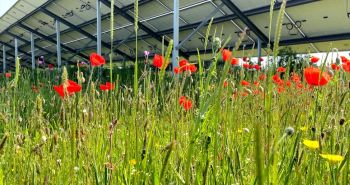
At Gailes Wastewater Pumping Station near Irvine, one of the most ambitious biodiversity schemes delivered alongside a Scottish Water renewable energy project to date is creating new habitats for wildlife while generating clean energy.
Before work began, detailed ecological assessments identified opportunities to enhance biodiversity and informed the design of the solar scheme from the start, ensuring habitat improvements were tailored to the site's wildlife, landscape and operational needs.
While biodiversity measures have already been incorporated at other Scottish Water renewable energy sites, Gailes is the first project where ecological studies have shaped the design from the beginning, embedding ecology improvements alongside renewable energy generation.
The work has included the creation of a wildlife pond, installation of bird and bee boxes, additional native tree planting, hedging and scrub planting, and the creation of over 2,000m2 of wildflower meadow, helping to transform the site into a thriving habitat for wildlife, including the rare tormentil mining bee.
Scottish Water Horizons, Scottish Water's commercial subsidiary responsible for delivering renewable energy projects, led the work.
Project Manager Pauline Donnelly said:
“Gailes has been a great example of how taking a more thoughtful, site-specific approach can really pay off. By looking closely at what will work best in each location, we can make sure we’re delivering the biggest possible boost for biodiversity as well as renewable energy.
“We’re already seeing the difference this can make, with the site coming to life through new habitats and species, delivering benefits for pollinators, amphibians, birds and more. Just as importantly, it’s shown how these kinds of improvements can be successfully delivered on a busy operational site.”
The work has also improved the ecological connectivity with Gailes Marsh Reserve and Western Gailes nature conservation area.
Following the success at Gailes, the approach will help inform future renewables projects on Scottish Water sites.
Each site will be supported by a dedicated ecological assessment to identify opportunities for biodiversity improvements based on local conditions, habitat potential and operational requirements.
Where appropriate and practical, those opportunities will be incorporated into project designs, helping ensure renewable energy generation is delivered alongside lasting benefits for nature.